May 2017: The birth of a new era on 144
Last september we had tried hard to regain a leading position in the IARU VHF contest, but ended only 2nd. So during the long winter we made new plans for 2017. Big plans!
Redesigning the antenna system
Our antenna jungle has grown over time by adding more and more antennas of various size and design, but it developed into quite a mess. It was time to go back to the start and design and build a new system from the ground. Last year we had already used three stacks of 4x6 ele which performed very well, but covered only about 150°. And they may even have suffered in TX from interference caused by the seven fully rotatable antennas on top of the mast. So the first cut was to remove this 7-direction-array which had served us well ten years ago, but now was no more good enough against tougher competition. And replace it by more stacks of those 4x6. As each stack covers 50° (-3 dB), we would need about seven of them for the full circle; because of mechanical constraints we ended with eight.
Another 20 yagis and 5 vertical tubes to build; also new supports and rotators. Plus all the electronics behind it, like a new combined rotator controller for the whole system. - Suddenly the winter did not seem to be so long anymore...
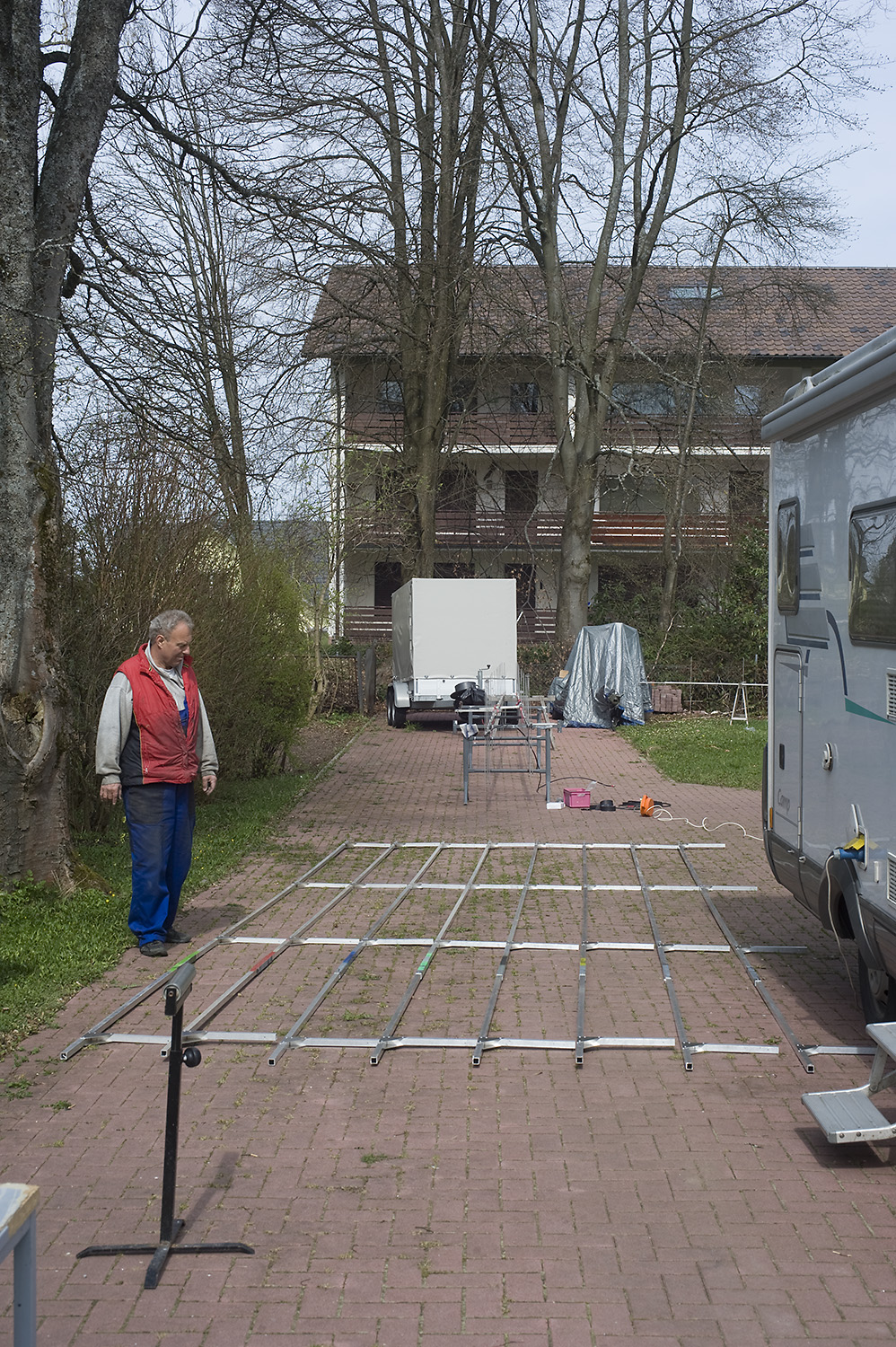
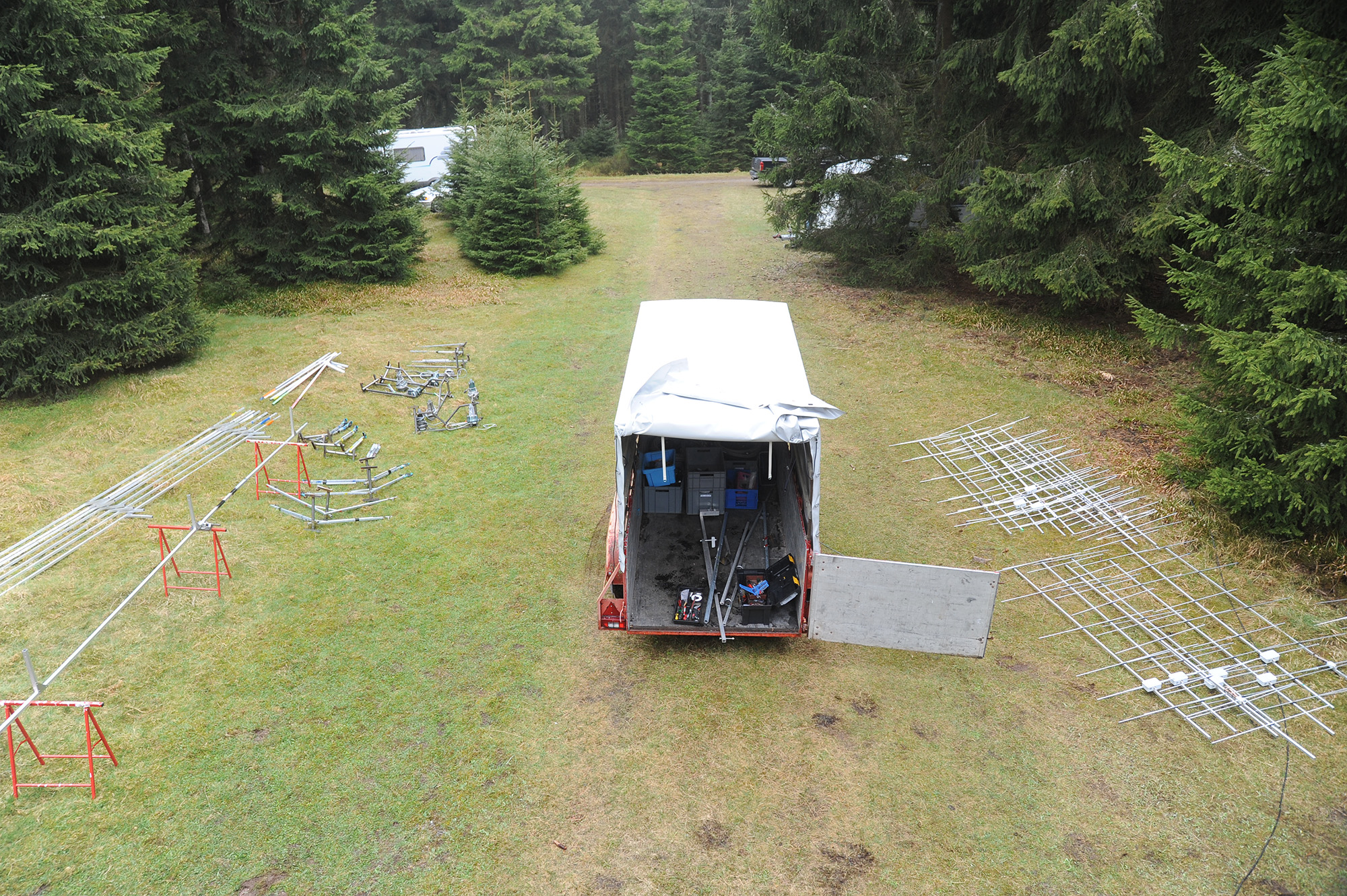
The 8 vertical tubes with 32 antenna supports during construction; each is 8 m long.
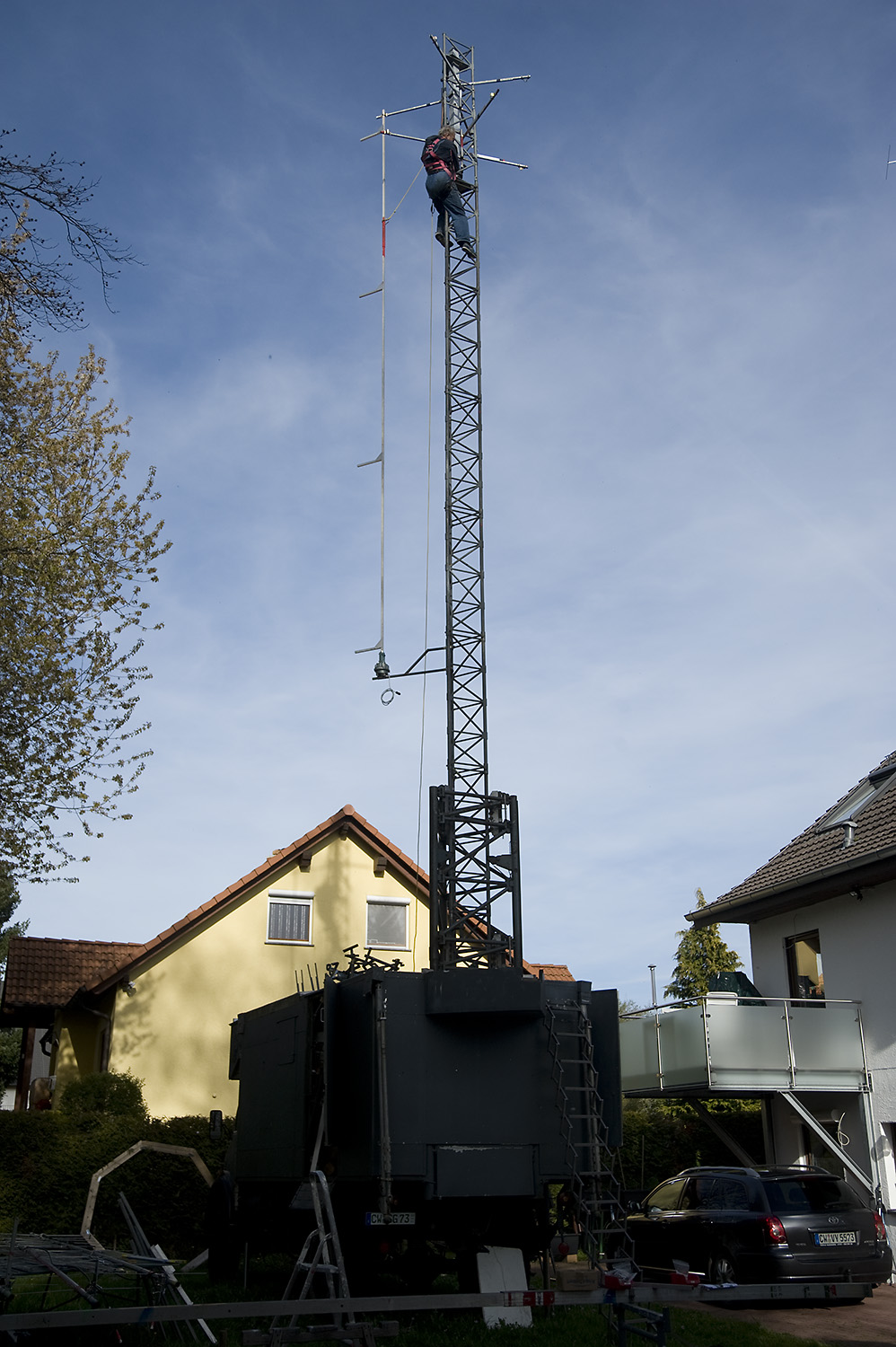
They seem to fit!
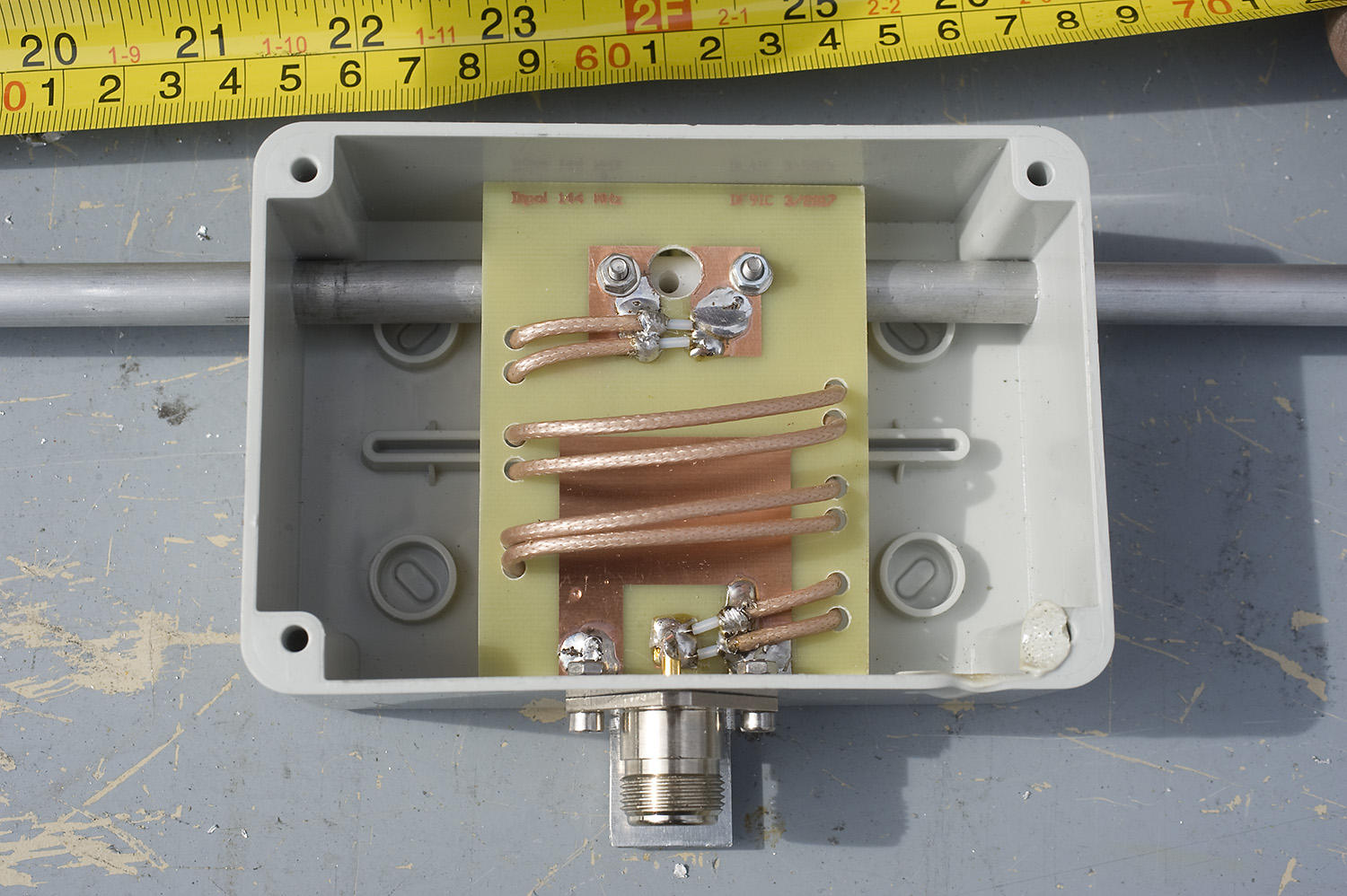
One of twenty new dipole boxes!
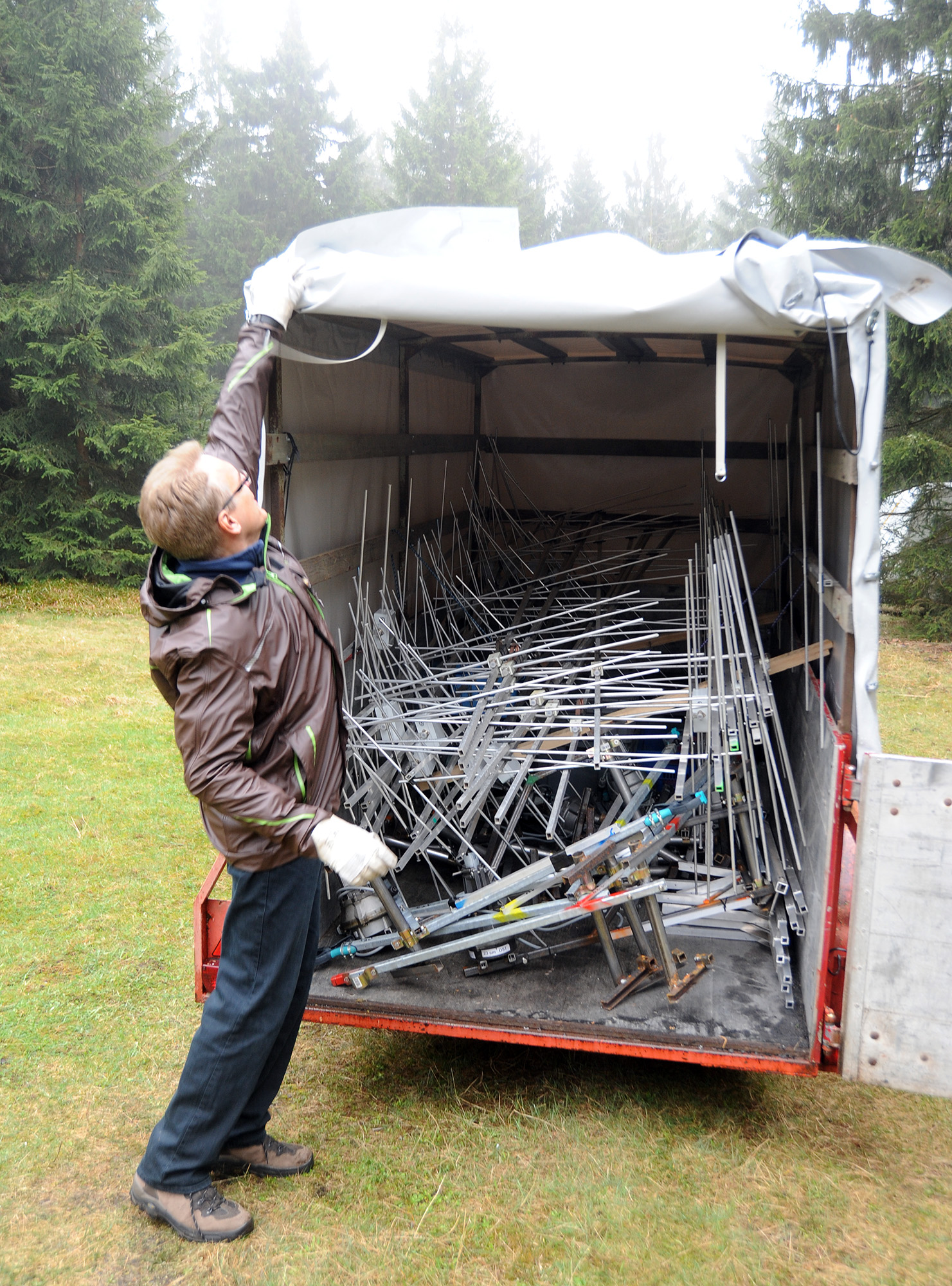
Completing the new setup
Should we really leave the top of the mast empty? - Last year we had a 2x17 ele M2 as the big gun, but compared to the new 4x6 who should already cover all directions this would be a bit lame.
What is better than 2x17? - clearly, 4x17.
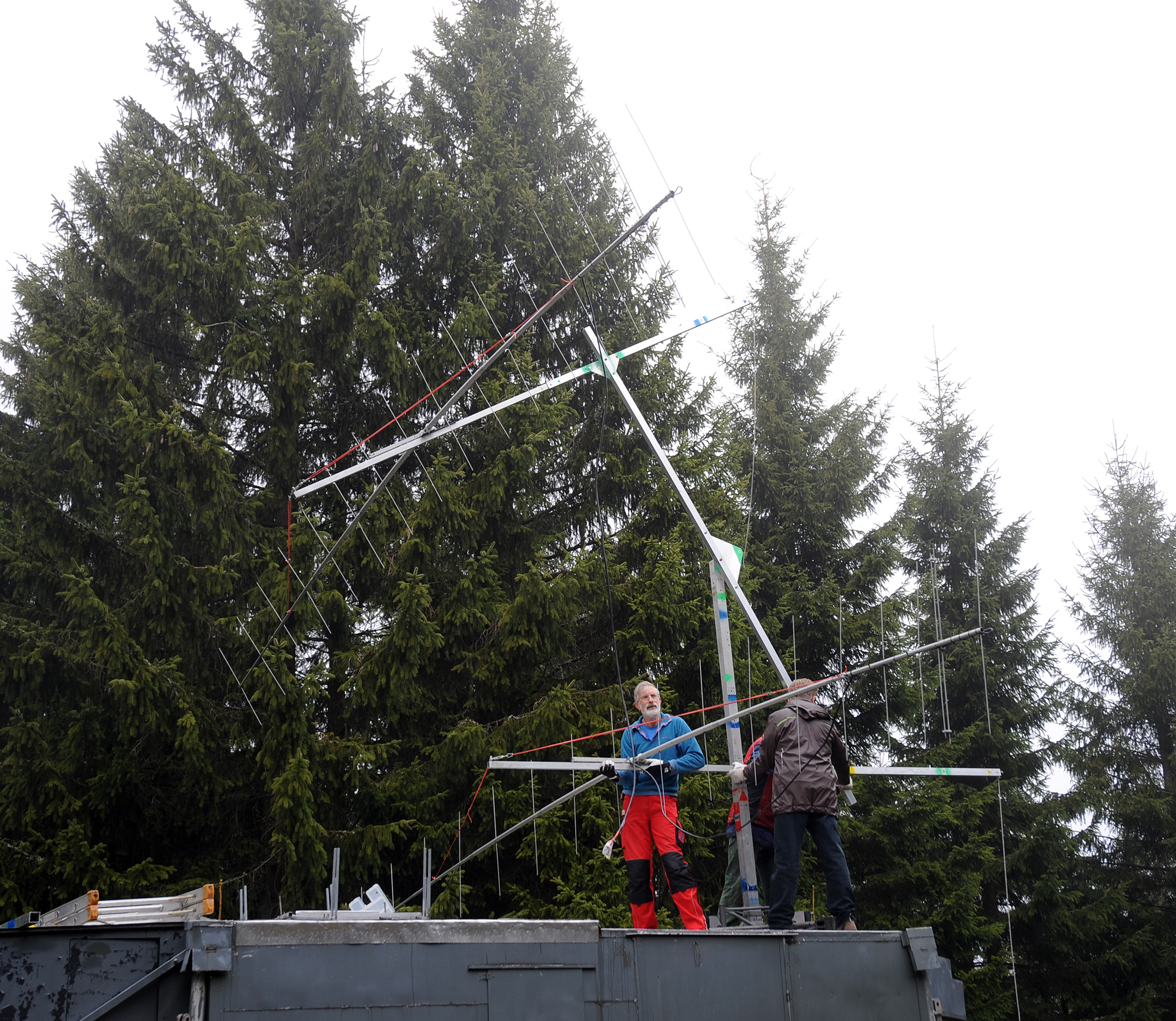
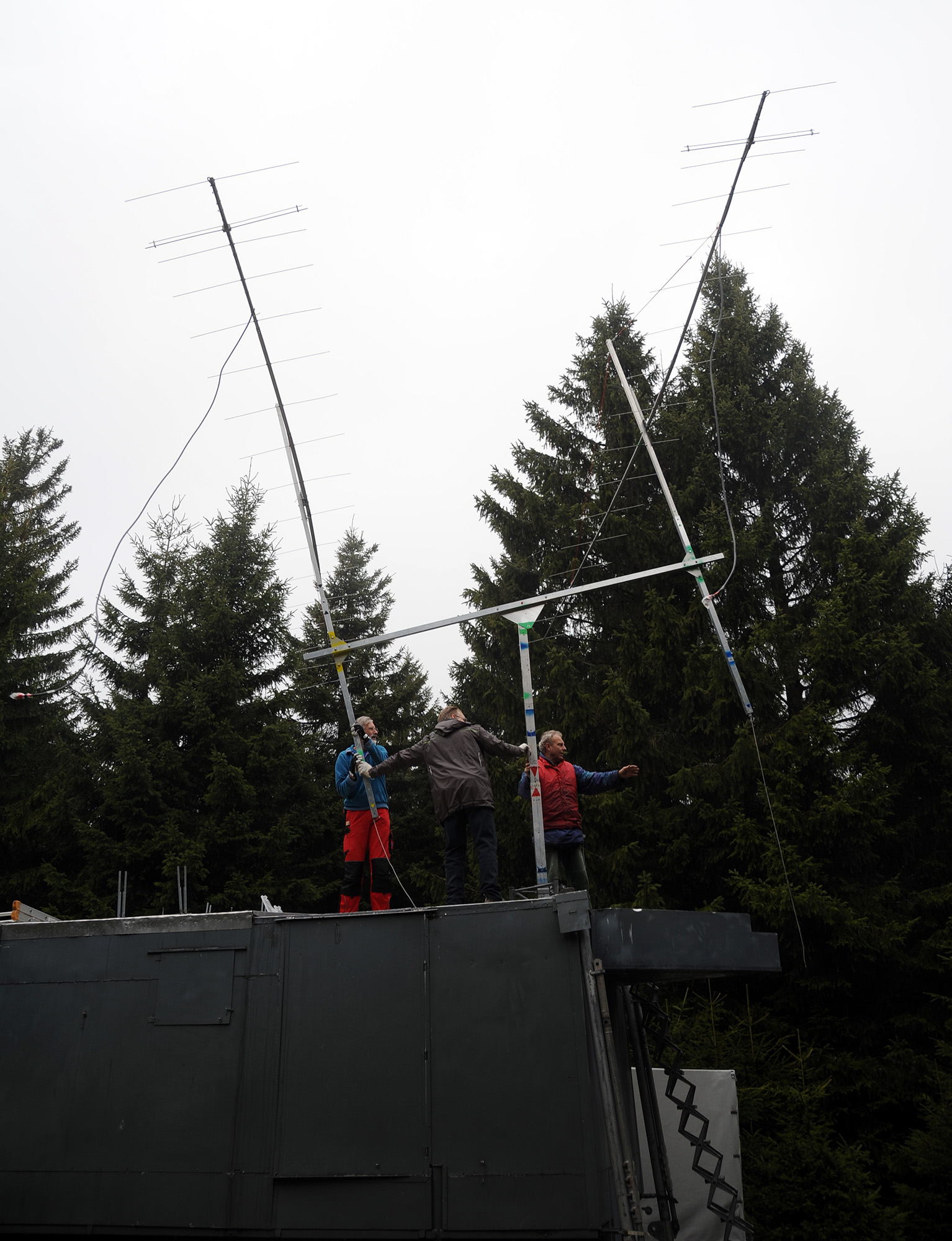
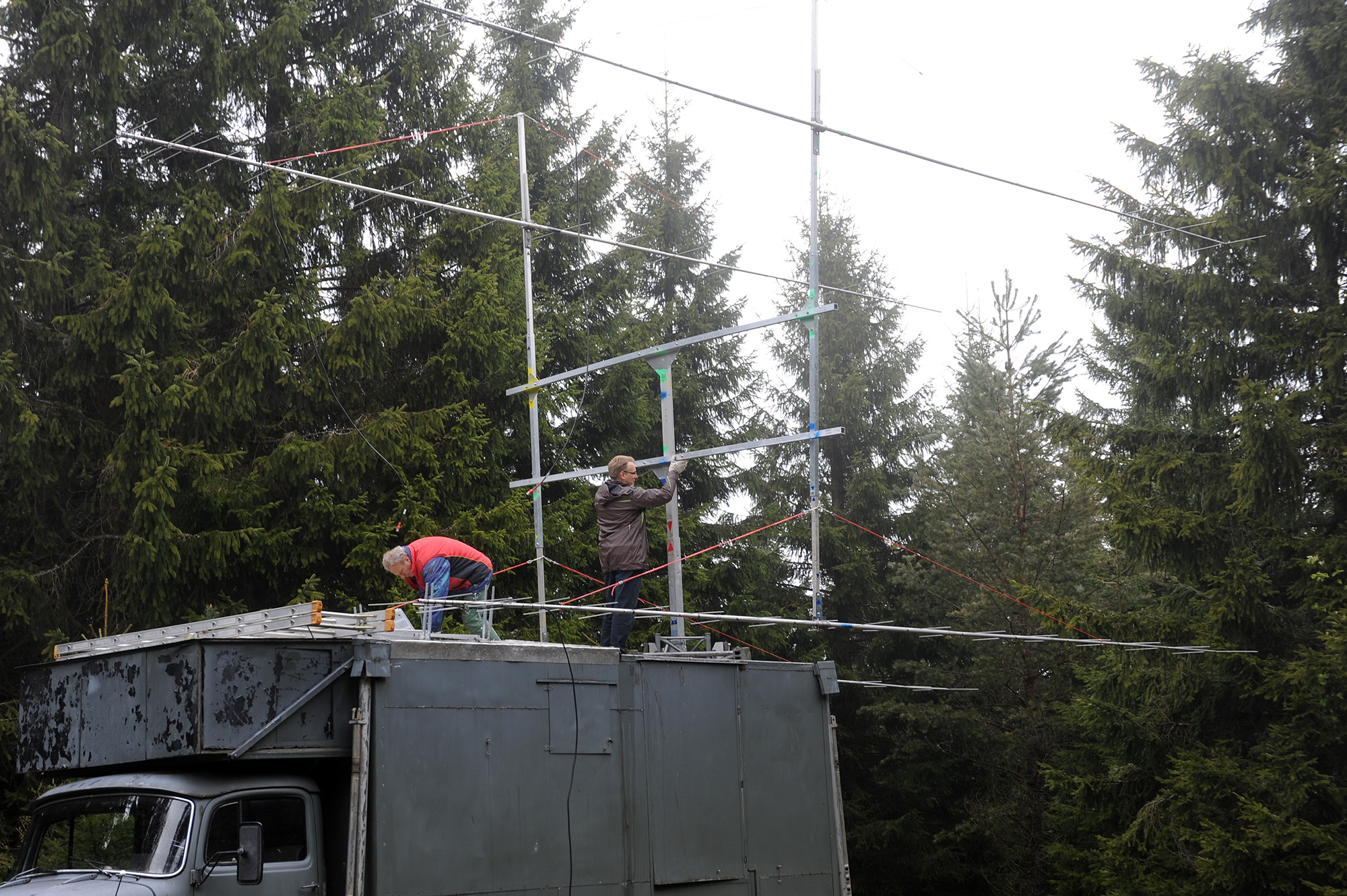
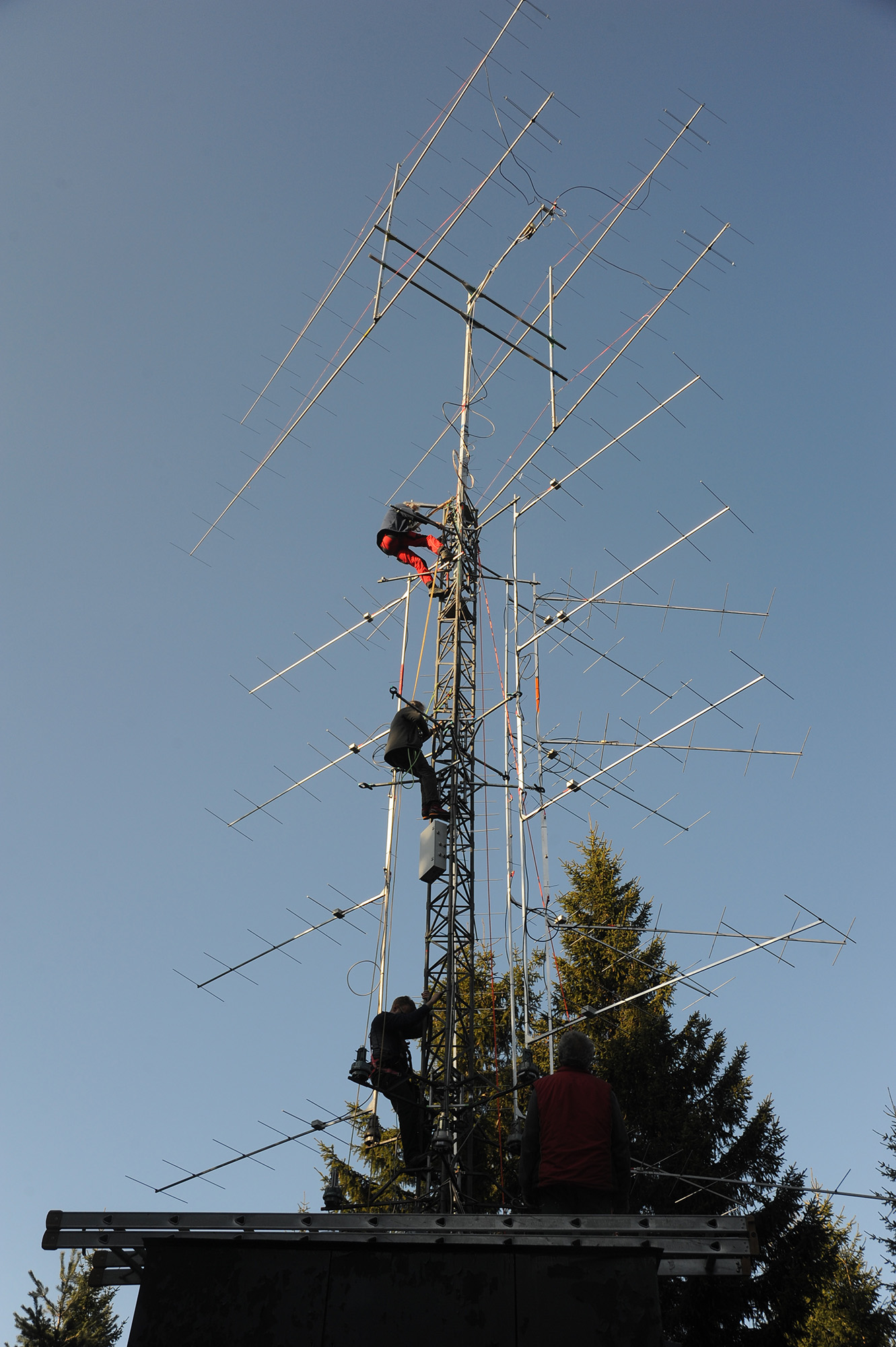
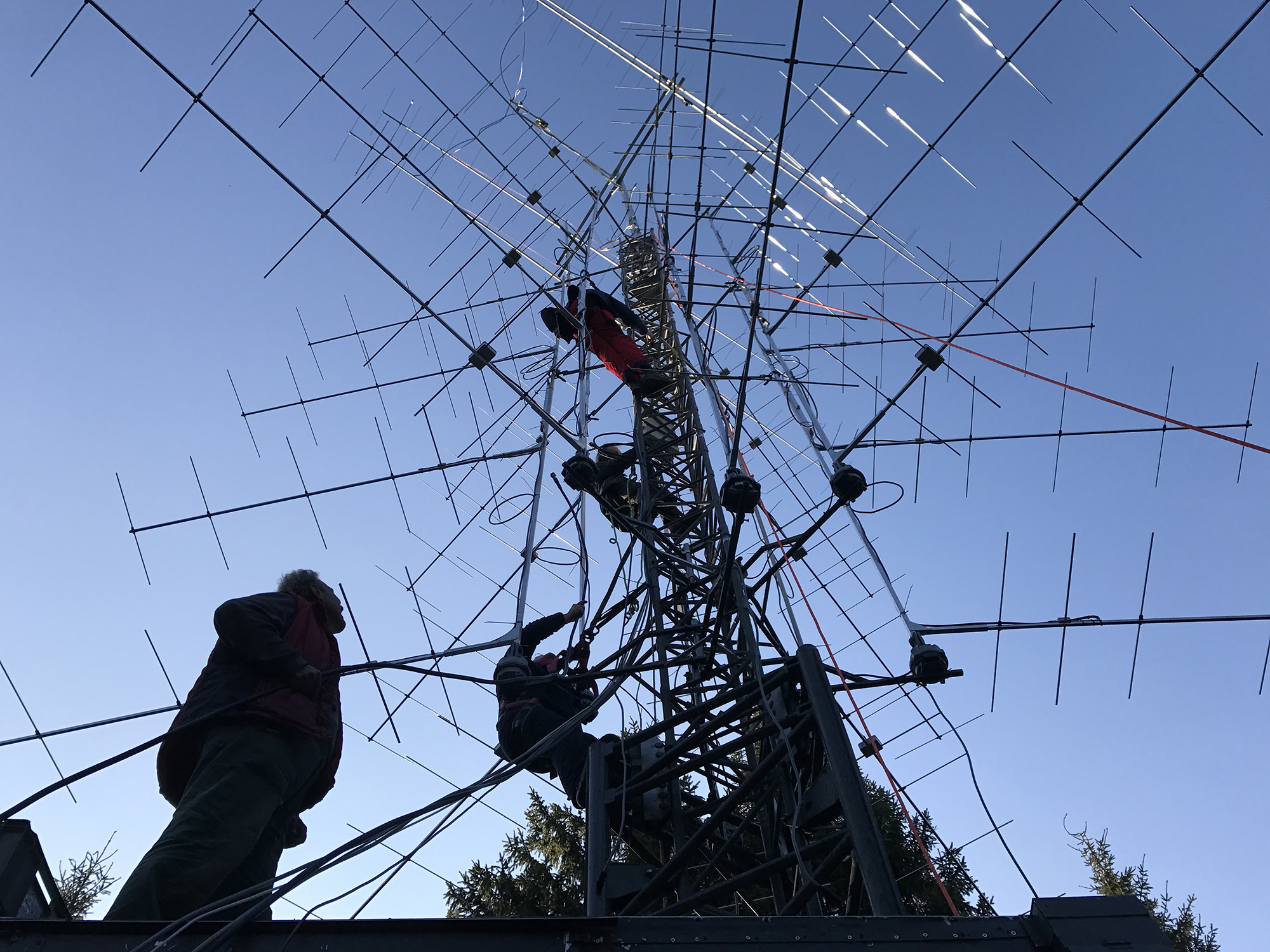
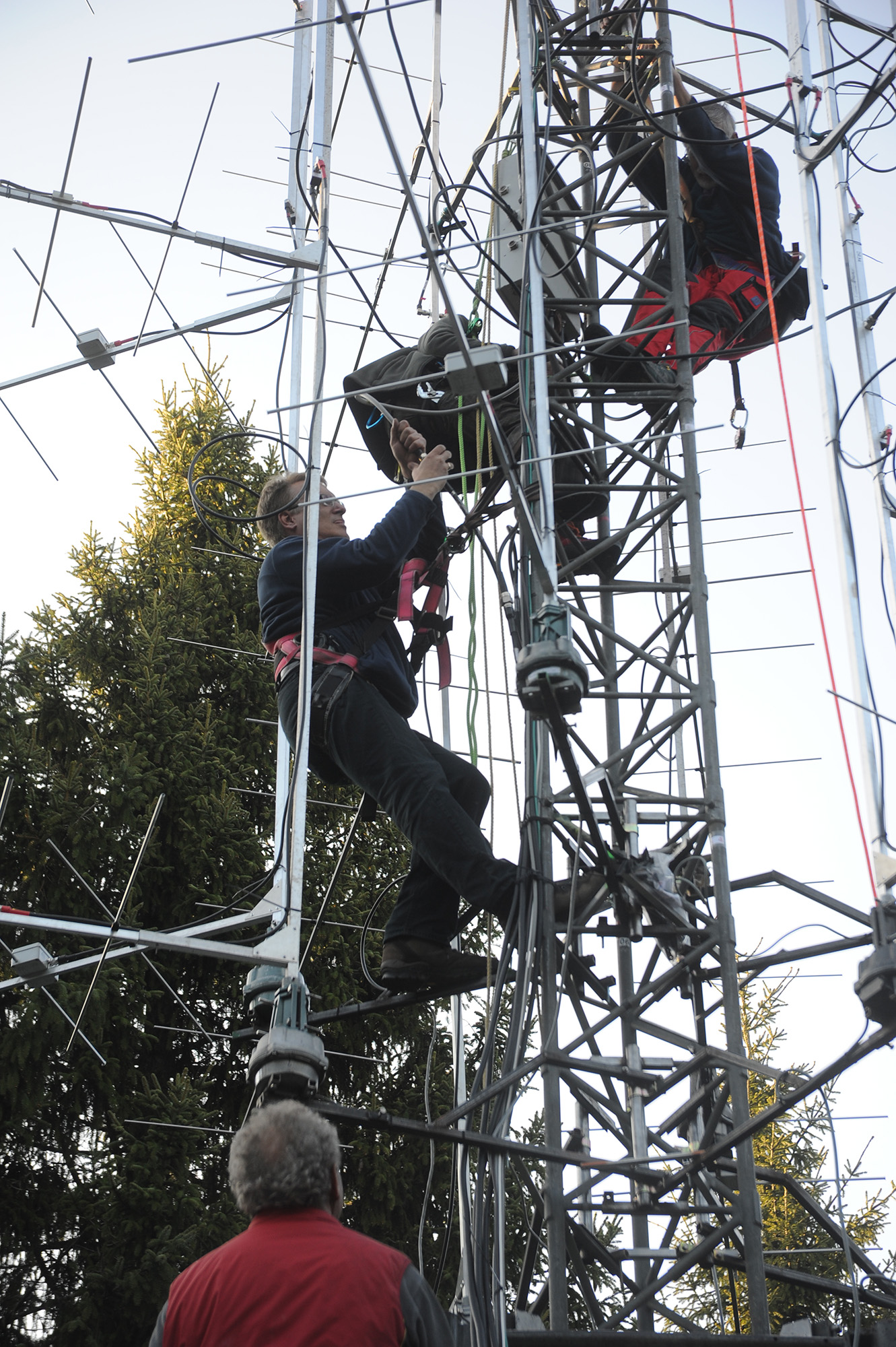
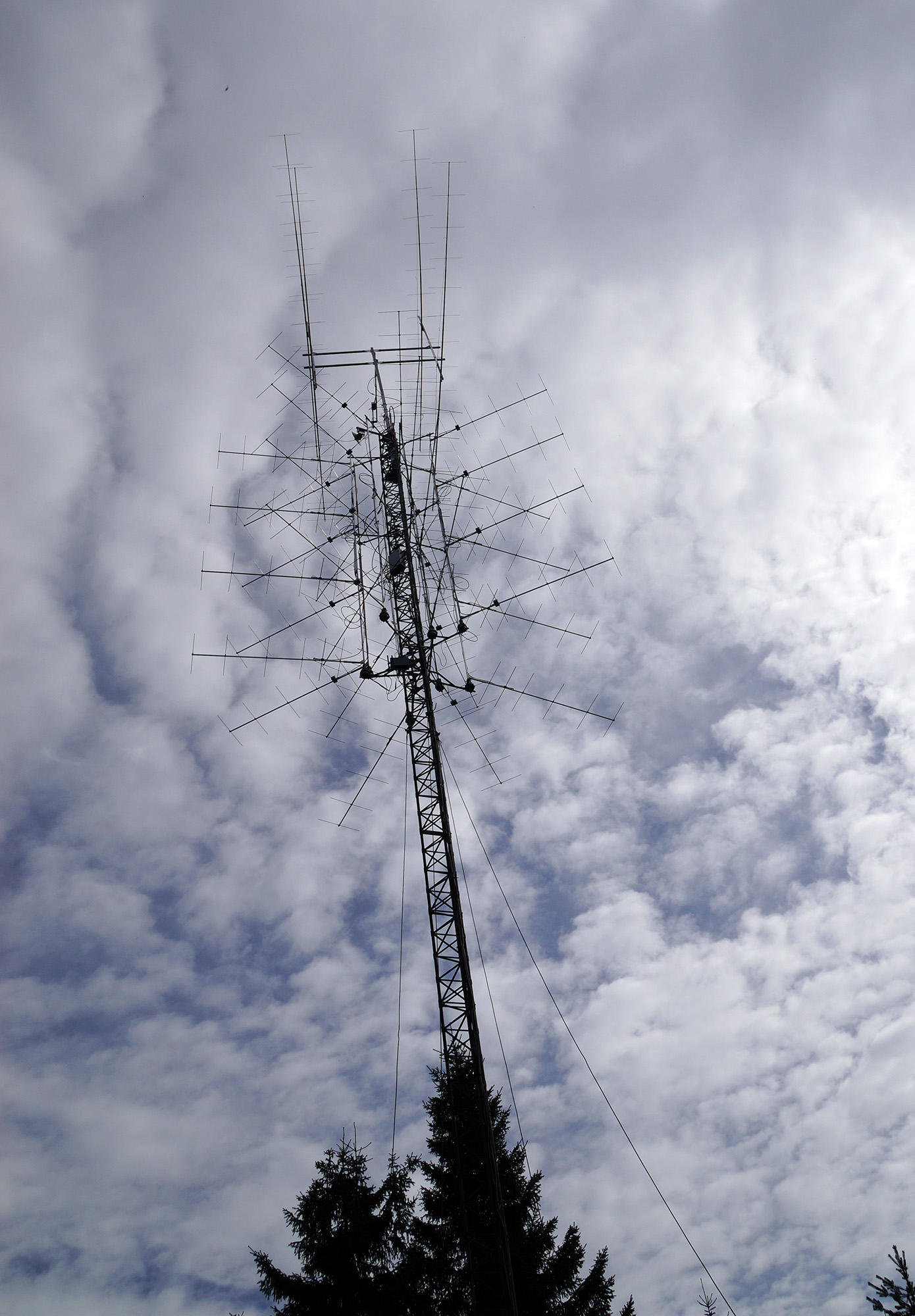
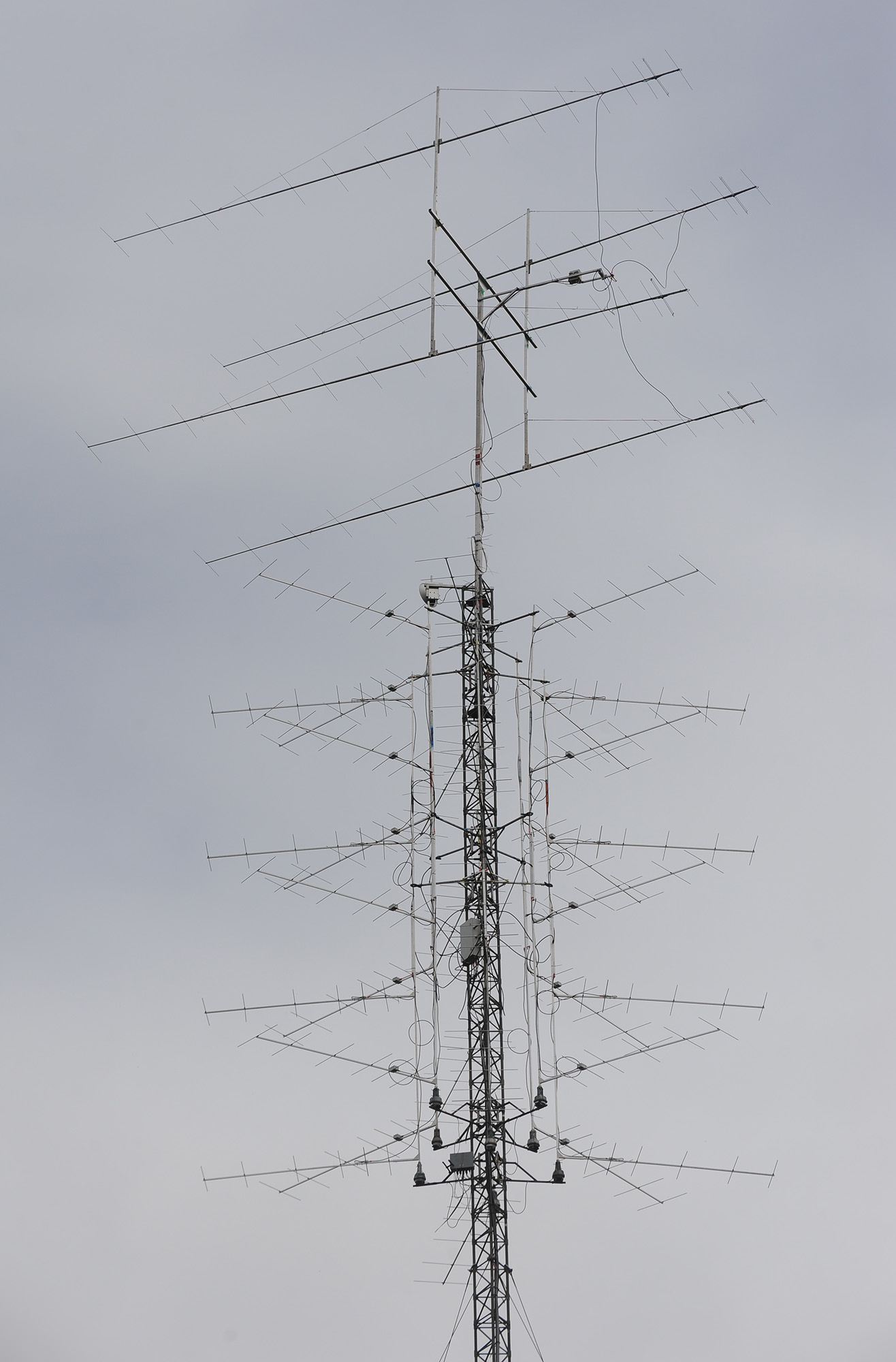
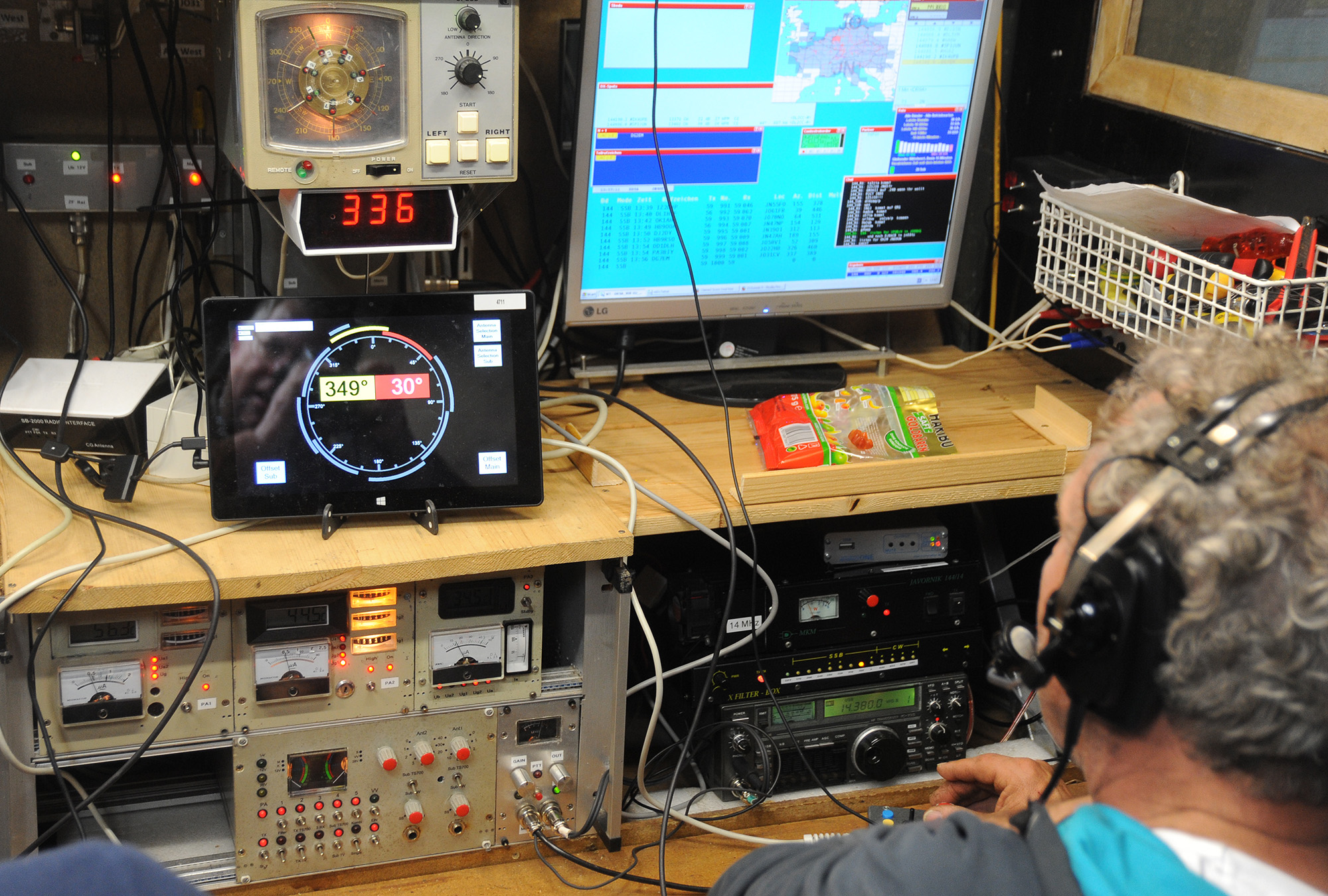
Four of the 4x6 stacks are mounted at the same level, while the other quadrupel is lifted by 80 cm. So we have a 90° offset between antennas in one plane, which helps to avoid collisions; each antenna can be pointed individually within a small range with a KR400/600 rotator. These 8 rotators and the 9th for the 4x17 are controlled from one controller box in the shack, visualized on a tablet screen, while the motor currents are switched in another box up on the mast, with a RS485 connection down to the shack controller.
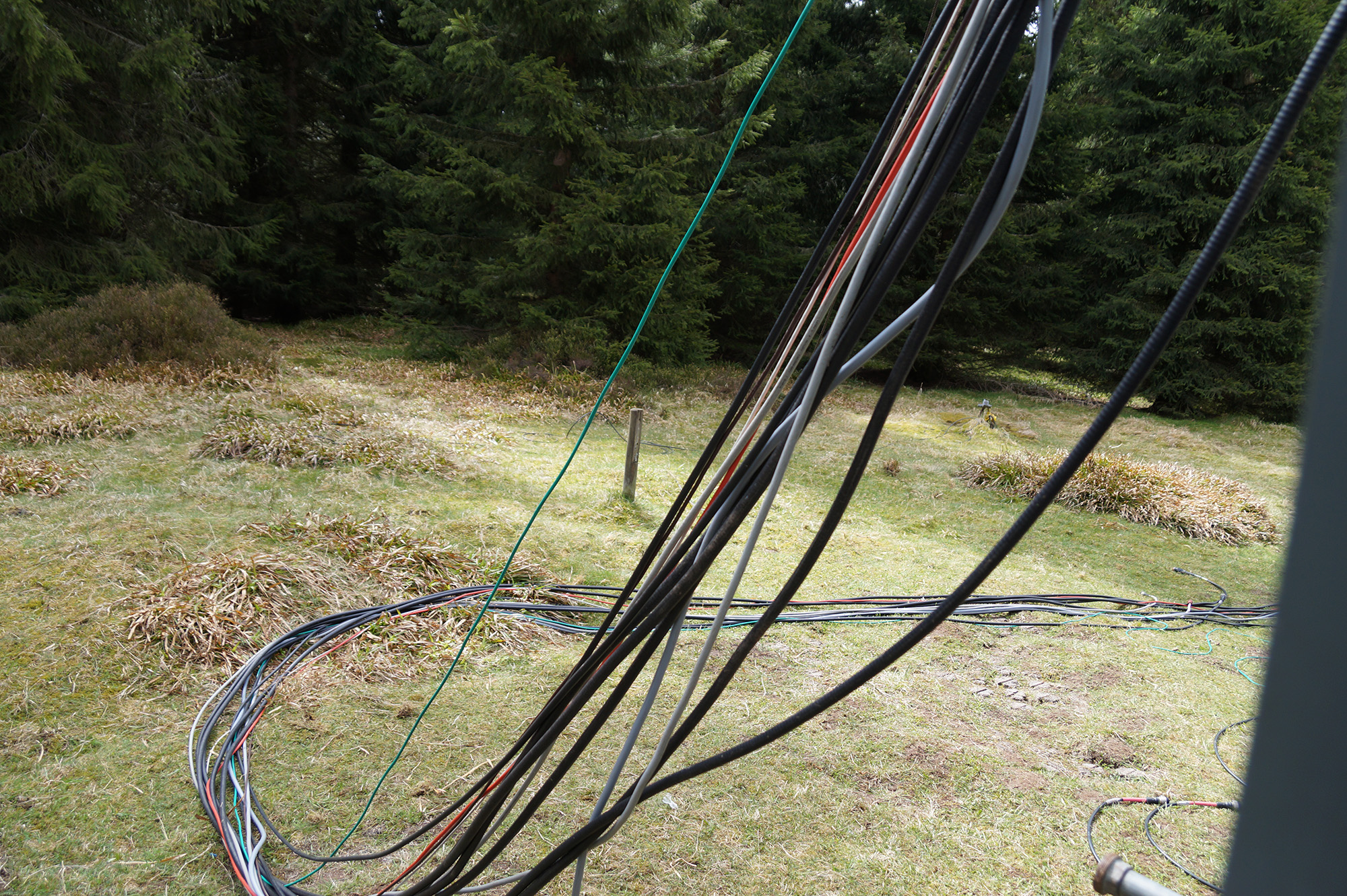
Our communication is wireless!
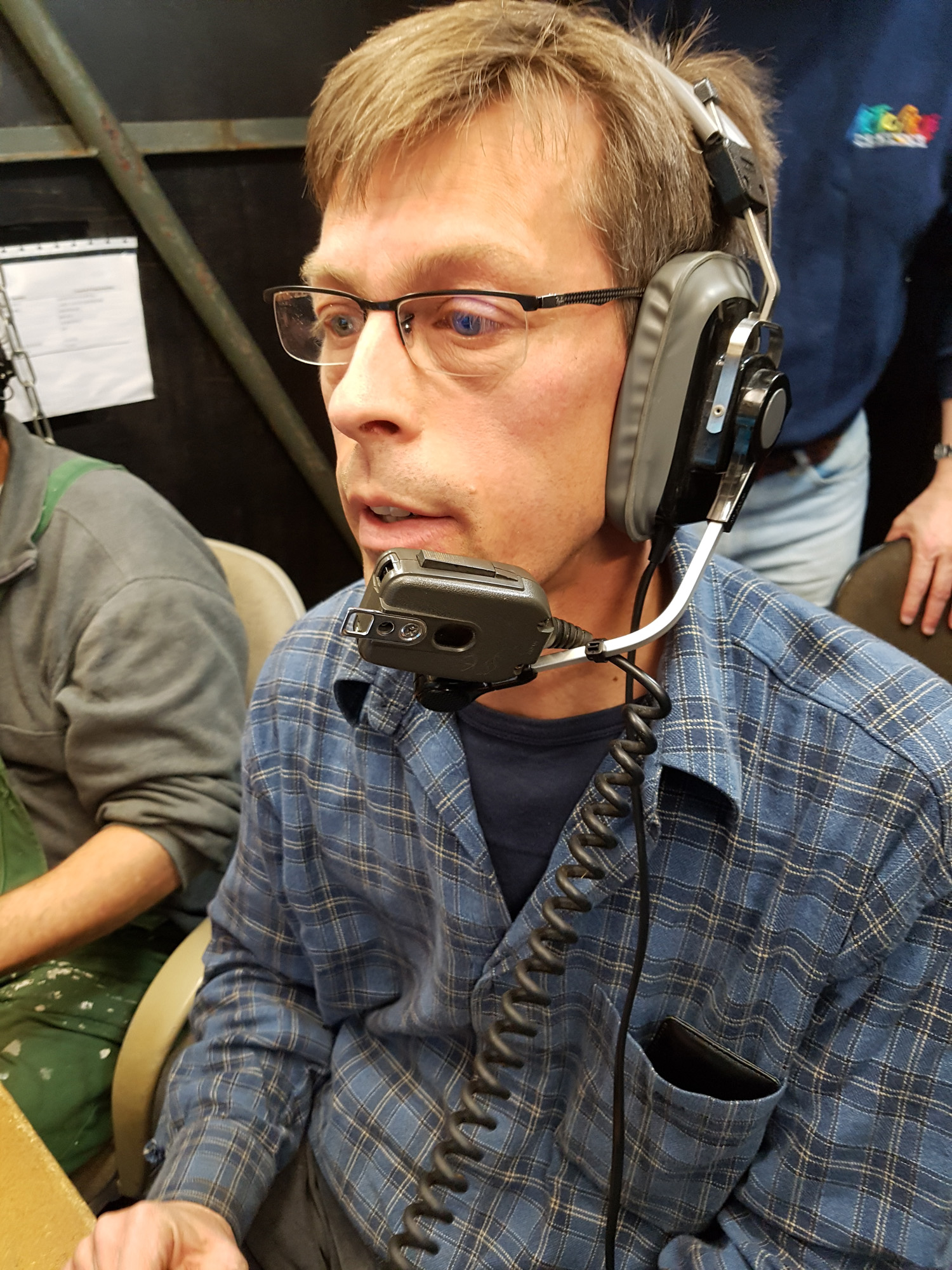
The microphone of the headset does not work? - no problem, we have a solution!
Contest weekend and results
The weather, which had been partly sunny on Friday, worsened more and more.
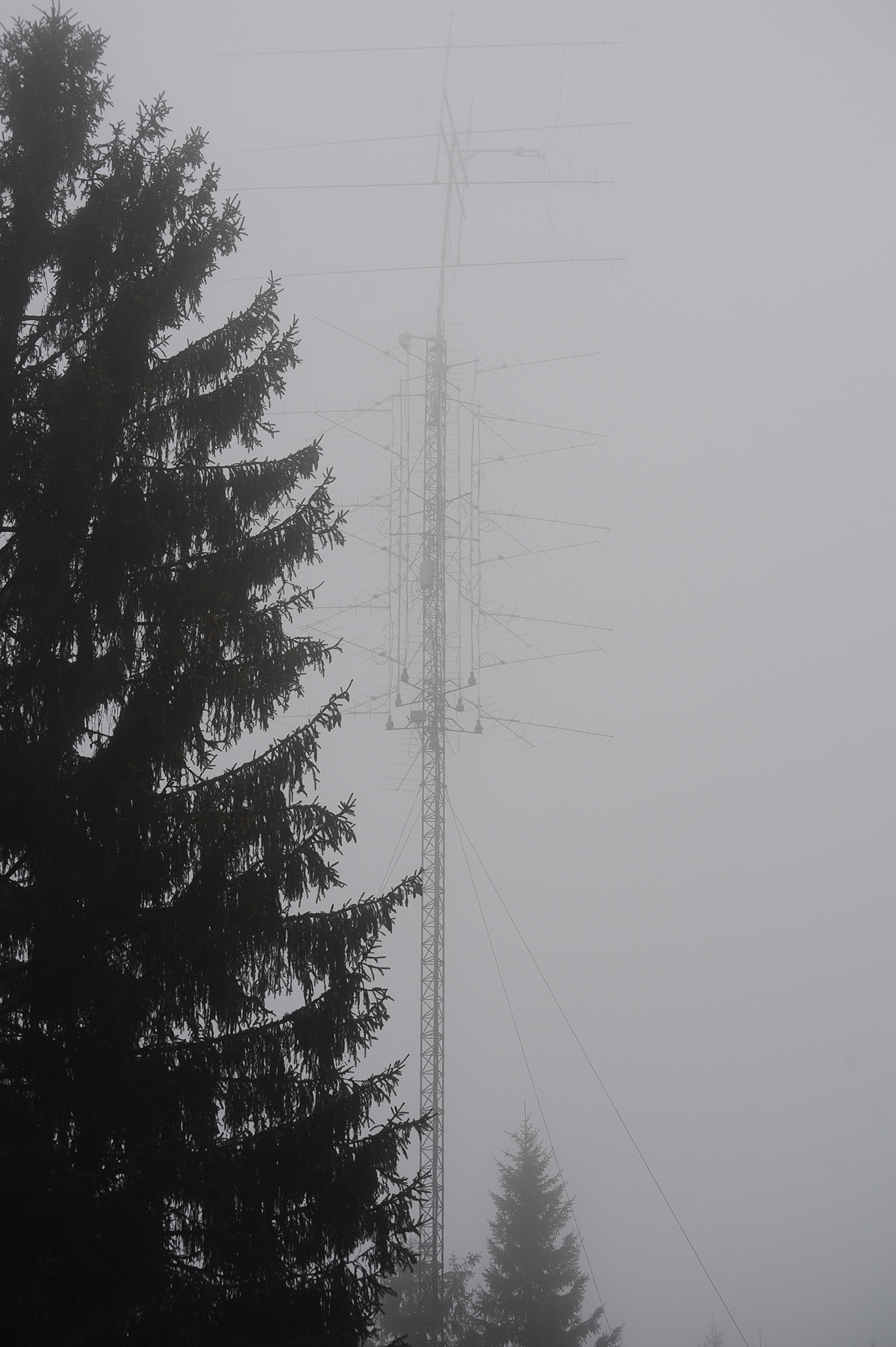
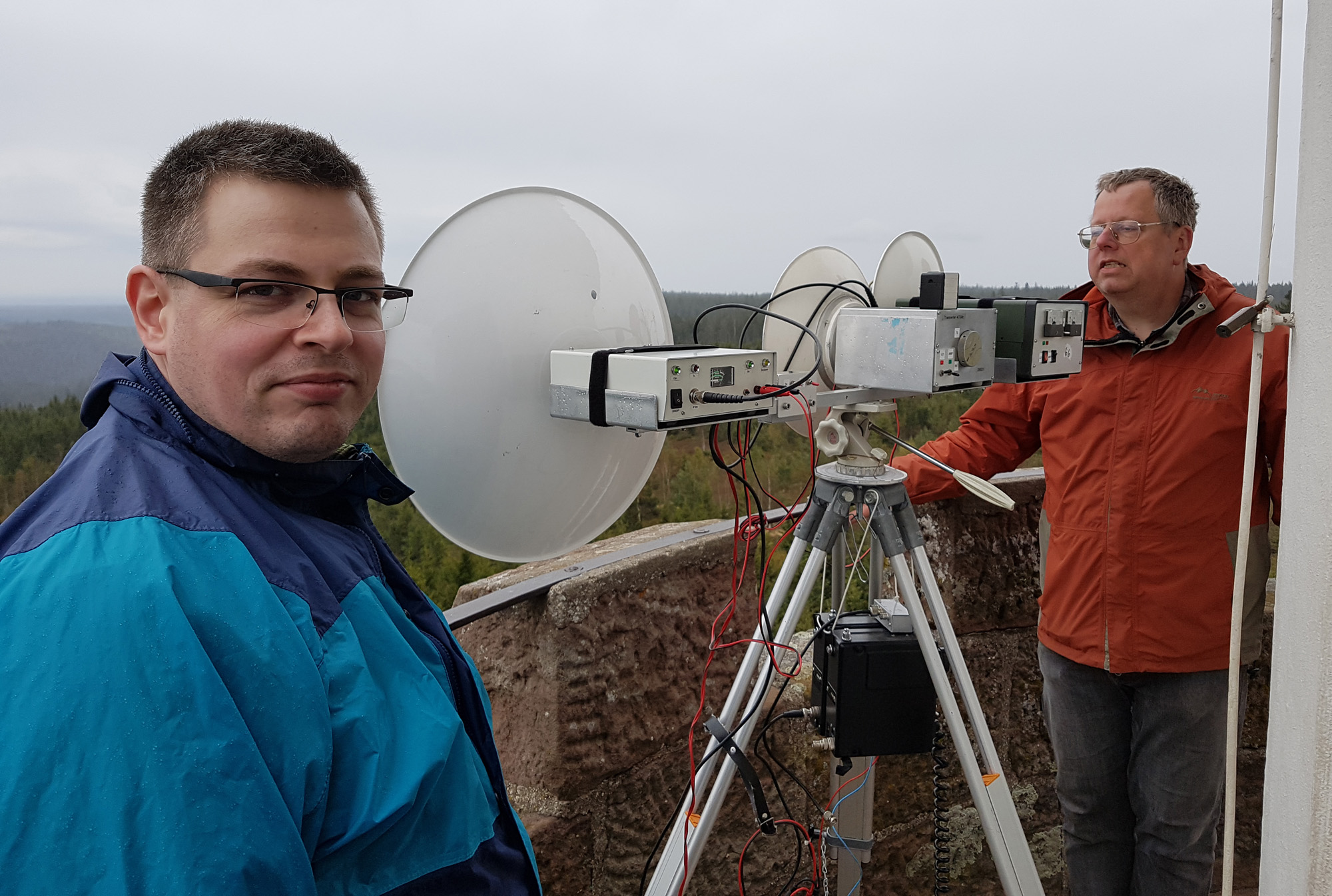
The contest began, and the haze opened up a bit. We tried QSOs on 24 GHz and 47 GHz, from the lookout tower. But the weather didn't hold up for a long time; we tried 76 GHz and heard Walter's signal, but when a dense cloud went in, his signal was gone.
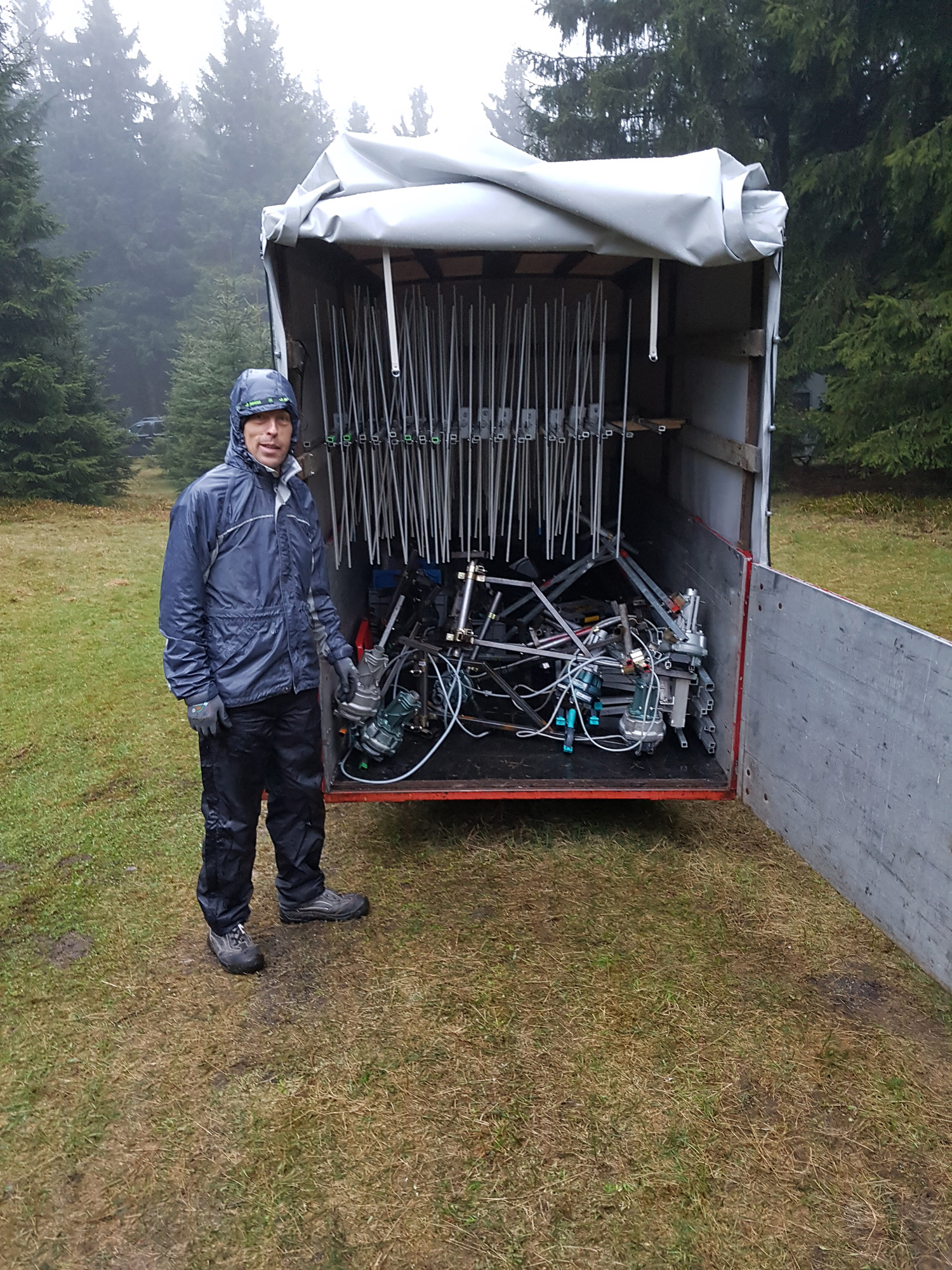
We finished on 144 MHz with 388k points which is an outstanding result for a May contest, and were more than 18% ahead of our strongest national competitor, DA0FF. Compared to a lead of only 5% over DA0FF in the IARU VHF 2016 contest, this gives us a good feeling that the new setup is a substantial improvement, and creates big hopes to be able to win the IARU VHF in September, against the strong international competition.
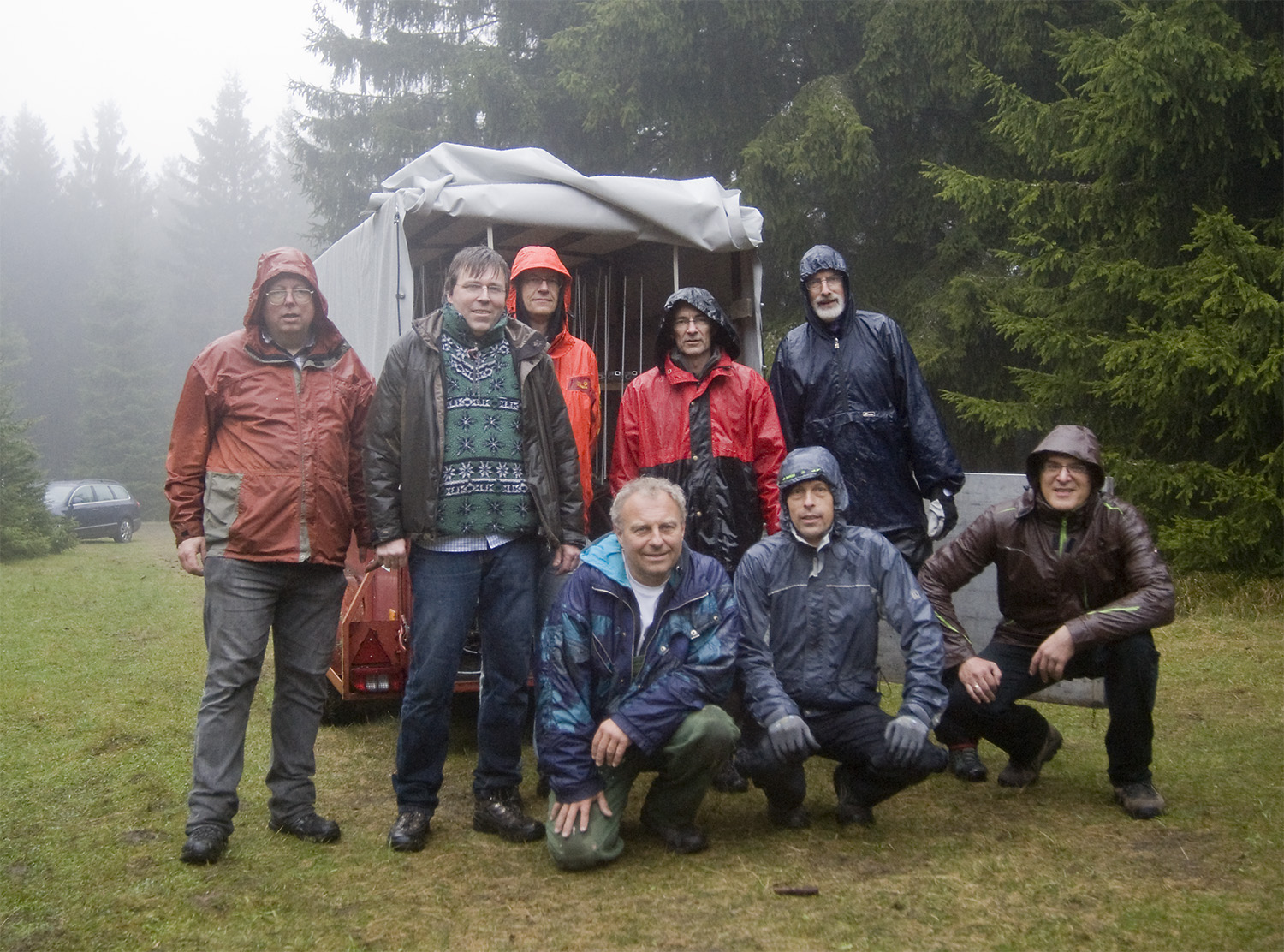
front row left to right: Helmut DK8SG, Jens DF5HC, Alexander DL8AAU
Results:
| BAND | QSO | LOC | POINTS | AVG DIS | ODX |
|---|---|---|---|---|---|
| 144 | 957 | 123 | 376457 | 393,4 km | YU7ACO 1068 km |
| 24G | 8 | 2 | 752 | 94 km | DL6SAQ/p 111 km |
| 47G | 1 | 1 | 111 | 111 km | DL6SAQ/p 111 km |